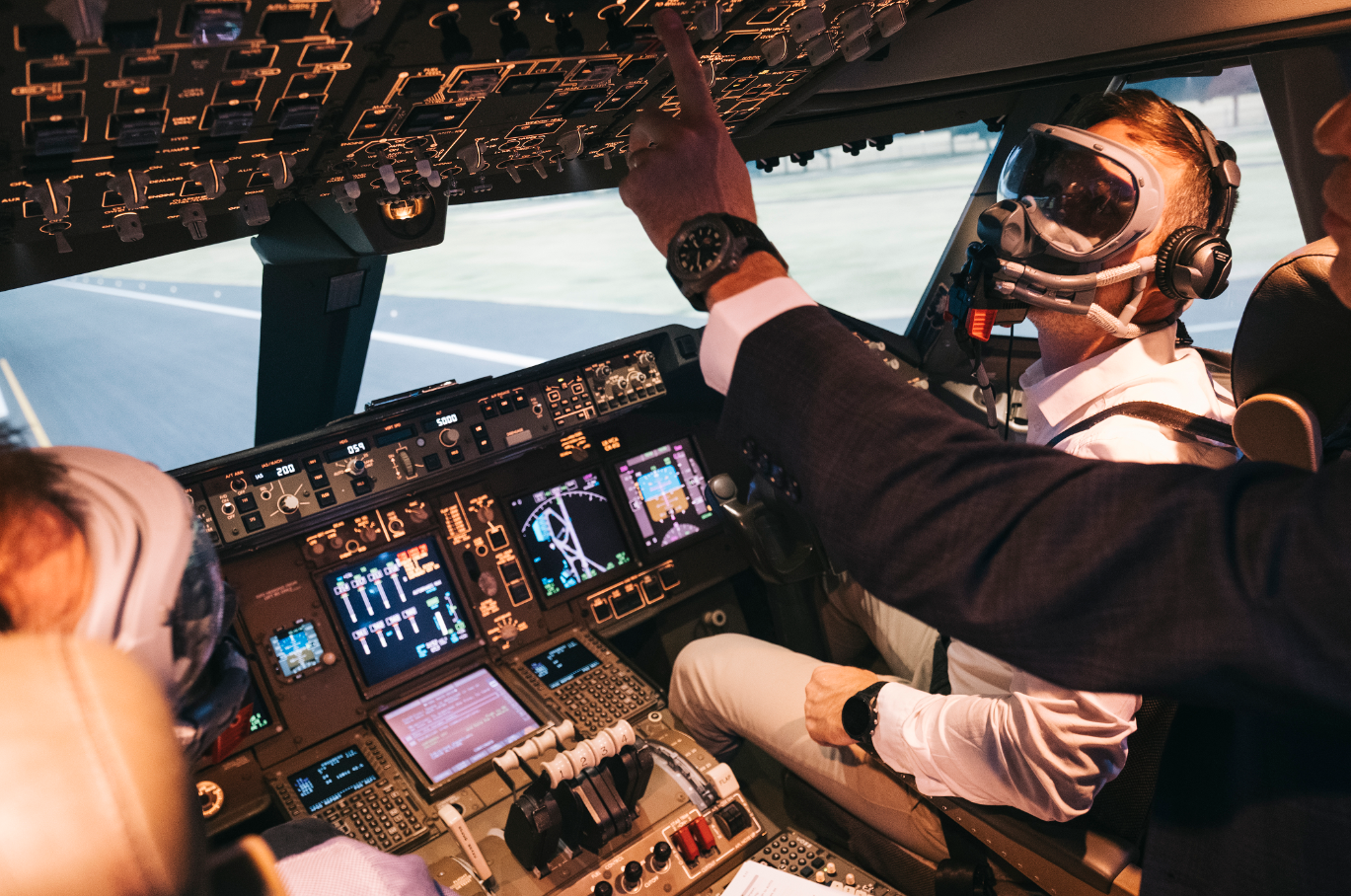
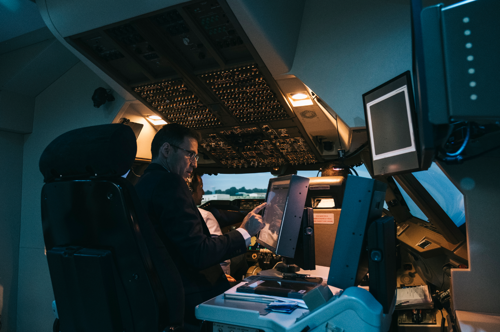
Once the foundations are in place,. This is where Arnaud takes over. “When they arrive in the full-flight simulator, I can focus on flying because I know they already understand the cockpit setup and procedures. That’s thanks to the TKI’s work,” he says.
The Simulator training is spread across 12 to 14 sessions, often with two instructors, so trainees benefit from different teaching styles. Early sessions focus on normal operations, before introducing system failures, challenging weather, and emergency procedures. Each exercise is designed to prepare pilots for real-world complexity.
“Sometimes, François will inform me about an area where a trainee needs extra attention,” Arnaud explains. “That heads-up allows me to address it immediately. Without that communication, we might lose time fixing things that should have been taught earlier.”
Here, instructors also play a role beyond pure knowledge transfer. “As instructors, we’re role models,” says Arnaud. “Pilots watch not only what we teach, but how we behave. Our actions — and even our inactions — set the tone for professionalism in the cockpit.”